What's On

Thursday, 23 August 2018

VOLVO 164 - 1960'S PRESTIGE CELEBRATES ITS 50TH ANNIVERSARY


CLASSIC TORQUE
FROM CLASSIC CHATTER


VOLVO 164 - 1960'S PRESTIGE CELEBRATES ITS 50TH ANNIVERSARY

Volvo 164 1960s prestige celebrates its 50th anniversary
While other parts of the world were in a state of upheaval in 1968, revolution was far from people's minds at Volvo in Gothenburg, Sweden. Instead, they were focusing on the launch of the new prestige model, the 164.
The notion of designing a slightly larger, more exclusive model had existed for a long time. In the late 1950s, a big luxurious Volvo with a V8 engine and a powerful, vertical grille was planned. However, this project died a death in 1960 when a survey indicated that compact cars were the future, especially in the US.

But the launch of the 140 series in 1966 gave rise to the idea of placing a straight-six-cylinder engine in the 140 body. That would allow Volvo to create the combination of prestige and compact size they were absolutely certain people needed.

Chief designer Jan Wilsgaard kept the chassis of the 14
0 series and used the front from the 1950s 358 project. Here, the iron mark logo once again took on a prominent position, placed on the diagonal in the same way as on the first Volvo back in 1927 – and as we see on today's models.

The 140 chassis was also extended by 10cm from the windscreen forward. This latter measure was needed in order to make space for the newly developed straight-six engine. This was designated B30, had a 3.0-litre capacity and developed 145hp thanks to twin Zenith-Stromberg carburettors.

The August 1968 press release proudly declared that the German ZF gearbox was of the "remote control" type, which meant that the relatively short gearlever was positioned on the transmission tunnel adjacent to the front seats.

The fittings were considerably more lavish than in the 140 series, with thick woollen fabric on the seats, textile floor mats and the rear seat designed for two people, with a drop-down armrest in the centre.

After the first year of production, the 164 was given leather upholstery as standard, integrated halogen-type auxiliary lamps and headrests. In the US, it was of course offered with electric windows, an electric sunroof, air-conditioning and tinted windows.


When US magazine Car and Driver tested the Volvo 164 in its July 1969 issue, readers were treated to a description of the kind of people who were expected to buy the new Volvo: "The Volvo people are looking to steal buyers from Buick, Oldsmobile and Mercedes showrooms, and they are doing just that. Volvo's new customers are professional types – doctors, lawyers, dentists… people who can afford something different."

An American advert for the 164 from Volvo was linked with the same theme: "The Luxury Car That Shows You Have More Than Money."

The Volvo 164 underwent continuous development throughout its life, with the addition of features such as electronic fuel injection (as of model year 1972).

The last model year was in 1975, and all the cars built in that year were exported to the US. By then, the car's successor, the 264, had already gone into production.

Five lesser-known facts about the Volvo 164:


  1. Only one Volvo 164 was turned into an ambulance. Volvo’s special vehicles division had a prototype built that was significantly taller and had an extended wheelbase. Although only one of these vehicles was ever built, this became a forerunner of the ambulances that would later be created on the basis of the Volvo 265.
  2. Volvo 164 production was relocated to Kalmar in 1974. The methods used at the new Volvo plant were very modern for the era. The cars were moved on battery-operated trolleys controlled by loops in the floor. Teams of workers assembled the cars. The workers were able to take it in turns to supervise, and job rotation around the various production tasks was possible.
  3. The prototype for the Volvo 262C luxury coupé, built in Italy, was based on a 164. Coachbuilder Coggiola converted it to a two-door coupé that looked more or less the same as the production model. One major difference was the way in which the prototype kept its 164 front.
  4. The six-cylinder B30 engine from the Volvo 164 was also used in a number of Volvo’s military off-road vehicles. A marine version of the B30 engine, with three carburettors, was also produced by Volvo Penta.
  5. Italian coachbuilder Zagato adorned its stand at the 1970 Geneva Motor Show with the 3000 GTZ sports coupé. This had the B30 engine under the bonnet and was based mechanically on the 164. The only prototype ever built is rumoured to still exist today.

Volvo 164 1960s prestige celebrates its 50th anniversary


BMH TO HAVE A MAJOR PRESENCE AT THE NEC CLASSIC SHOW AND GOODWOOD REVIVAL EVENTS

CLASSIC TORQUE
FROM CLASSIC CHATTER


BMH TO HAVE A MAJOR PRESENCE AT THE NEC CLASSIC SHOW AND GOODWOOD REVIVAL EVENTS


For the third year in succession, British Motor Heritage (BMH) will have a major presence at the NEC Classic Motor Show (November 9-11), in order to further promote its ever-expanding range of Heritage replacement body panels and shells for BMC/British Leyland cars of the 1960s/1970s, plus the carefully-selected classic parts and accessories available through its burgeoning online store, Motoring Classics.
Star of the stand
Taking centre stage on Stand 465 (Hall 2) will be the long-suffering 1967 MK1 Mini-Cooper S ‘OYO 747F’, which was butchered to provide master references for the prototype MK1 replacement bodyshell that caused a storm of interest on the very same exhibition stand two years ago. Fittingly, it is that exact same prototype shell that has subsequently been employed in the recent resurrection of the original car– an exacting job that was entrusted to renowned Classic Mini guru and BMH Approved Specialist, Somerford Mini.
Mountney steering wheels and Goodridge brake hoses now available from Motoring Classics
Sharing stand space with the Mini and available for immediate sale will be a selection of best-selling items from BMH’s Motoring Classics range, including Piloti driving shoes, Tex replacement mirrors and wipers, and Irvin flying jackets. Newly-available are leather and wood-rim Mountney steering wheels and Goodridge braided brake hoses.
British Motor Heritage will be displaying and offering a similar selection of goods at the rapidly upcoming Goodwood Revival race meeting (September 7-9). All attendees are warmly invited to visit Stand No.241.
Source: BMH Ltd

Wednesday, 22 August 2018

HISTORIC HILLCLIMB PROVIDES IDYLLIC BACKDROP TO CAMBRIDGE & COUNTIES BANK CLASSIC CAR FINANCE LAUNCH

CLASSIC TORQUE
FROM CLASSIC CHATTER


HISTORIC HILLCLIMB PROVIDES IDYLLIC BACKDROP TO CAMBRIDGE & COUNTIES BANK CLASSIC CAR FINANCE LAUNCH


  • Cambridge and Counties Bank launch classic car finance
  • FBHVC Chairman David Whale delivers positive talk on the future of the industry.
  • Finance packages for all classic and historic vehicles offered with loans from £63k - £1.5m
  • Bespoke packages available for rare and specialist cars including historic racing cars.
  • Equity release considered.
FBHVC Chairman David Whale

Cambridge & Counties Bank have launched their Classic Car Finance scheme at the 4thedition of the Chateau Impney Hillclimb under a blazing sun and to the soundtrack of one of the most impressive and picturesque classic and vintage motorsport events in the UK. The Chateau Impney event attracted over 200 competitors, spread across eighteen classes that represented over £430 million worth of historic motor vehicles. Those statistics combined with rising values in many sectors of the industry served to highlight the ever-growing importance of finance within the classic car industry.
The Cambridge & Counties Bank team, coming together to cheer on the action on track at Chateau Impney and draw up their own ‘fantasy garage list’, illustrated that they are able to combine their head for finance with that all-important heart for classic and vintage cars.
Tom Senior, Director of Classic Car Finance explains, “As a team of petrol heads we realise that our clients buy all sorts of different cars for all sorts of different reasons other than just pure investment. They often want to access a lifestyle, participate in certain high-profile events or motorsport to fulfil their lifelong dreams or simply want to ensure that our transport heritage is preserved and protected for future generations by becoming custodians of significant vehicles.” 
The Cambridge & Counties Bank Classic Car Finance scheme will focus on classic and historic vehicles with loans offered from £63k - £1.5m, but with a bespoke approach will consider other specialist vehicles and racing cars.
The scheme will offer the ability to borrow up to 90 % of the purchase price with flexible advance rates. Variable balloon rates are considered with repayment terms typically up to 5 years. Cambridge & Counties Bank are also able to consider refinancing and equity release on classic cars.
Joining the classic car connoisseurs from the Cambridge & Counties Bank team for the launch, were a number of existing customers, plus high-profile members of the classic car world including Chairman of the Federation of Historic Vehicle Clubs, David Whale who was on hand to give an informative insight into what successes, opportunities and challenges the historic vehicle world faces.
David Whale explained that; “Despite some challenging economic times in some quarters, the classic car industry continues to grow. Our research from the FBHVC is carried out to inform the conversations we have around legislation and to gather together a public opinion on the movement. In 2011, the overall contribution to the UK economy by the historic vehicle industry was 4.3 billion and in 2016 it was 5.5 billion so clear growth.”
David Whale was buoyant and positive about the future for classic cars, “There has been a move of focus for some investors towards the more modern classics and in particular, early or low mileage models of fairly every day but iconic machines. That’s not a bad thing and shows a natural evolution in the market which suggests a good future with younger generations looking to enter the classic car market.”
In concluding the relaxed and informal launch, Neil Fender, Head of Classic Car Finance at Cambridge & Counties Bank said, “We live for and love the cars, events and lifestyle that our clients are also passionate about. That expertise enables us to deliver classic car finance properly and do the right thing by the custodians of our transport heritage. Being here at Chateau Impney to launch Classic Car Finance at Cambridge & Counties Bank was a great way to begin as we mean to go on, being a part of the fabric of the tight-knit historic vehicle community.
                                                                   Cambridge and Counties Bank sponsored Ginetta on track

Source: Cambridge & Counties Bank

Tuesday, 21 August 2018

THE ROLLS-ROYCE ‘SILVER GHOST COLLECTION’, IN MOTION

CLASSIC TORQUE
FROM CLASSIC CHATTER

THE ROLLS-ROYCE ‘SILVER GHOST COLLECTION’, IN MOTION


The Rolls-Royce ‘Silver Ghost’ was the motor car that established Rolls-Royce’s reputation as ‘The Best Car in the World’. In celebration of this defining heritage, Rolls-Royce has created a limited collection of just 35 Bespoke Ghosts, named the ‘Silver Ghost Collection’. Today, the marque releases a film showing this elegant contemporary iteration of Ghost, in motion.
Matthew Butt, Product Manager – Ghost, Rolls-Royce Motor Cars, commented, “Careful consideration has been paid to the Collection’s defining features. References extoling the past are skilfully hand-crafted into Ghost’s interior and exterior, creating a contemporary homage which speaks as much of today’s great brand as the original Silver Ghost does of its day. This is a truly remarkable Collection.”
A solid sterling-silver Spirit of Ecstasy, the muse that has guided motor cars created by the marque since 1911, hints at the pioneering heritage of this motor car’s forebear. A specially created Hallmark of AX201, the registration plate of the original ‘Silver Ghost’, is marked on the base of each muse and a black-gold-plated collar enshrouds the base, itself bearing the unique identity of this collection. An insert is crafted from hammered copper, in tribute to the copper extensively used in the engine bay of the original ‘Silver Ghost’. The copper, shaped, beaten and textured is also engraved with the newly designed AX201 Hallmark.
To view the film, click here. For the full ‘Silver Ghost Collection’ press release and images, please visit press.rolls-roycemotorcars.com.


Monday, 20 August 2018

WILLIAM MEDCALF VINTAGE BENTLEY: THE TRANS-AMERICA CHALLENGE 2018

CLASSIC TORQUE
FROM CLASSIC CHATTER


WILLIAM MEDCALF VINTAGE BENTLEY: THE TRANS-AMERICA CHALLENGE 2018


William Medcalf prepared 1927 Bentley 4 ½ tackles gruelling transcontinental odyssey
Trans America Challenge covers 8,000 kilometres over 22 days

West Sussex, 20th August 2018:
The drive across the USA, from sea to shining sea, is one of the must do trips on many a driver’s bucket list. Whichever roads you choose, this transcontinental odyssey is sure to captivate you as it has for countless other travellers, writers and artists over the years.
Throw in an element of competition and timing, along with an exquisite vintage Bentley motor car and, what you end up with, could be argued to be the journey of a lifetime.
The third edition of the Endurance Rally Associations’ classic American road trip was acclaimed by some as the best yet and, along with another 32 crews, Bill and Julie Holroyd, in a William Medcalf prepared 1927 Bentley 4 ½, took up the challenge.
Their route to the chequered flag was a typically tough one and it led them from the charming southern city of Charleston, on the hot and humid South Carolina coast, all the way to Seattle in the cold, clear Pacific Northwest.
Covering an impressive 8,000km over 22 days, the rally saw everything that only such an epic road trip could produce. Temperatures in the Deep South approached a fuel boiling 40°c, a tropical storm, Alberta, soaked everything and everybody to the bone, the 4302m altitude and thin air of the legendary Pikes Peak tested the fuel/air mixtures and the brakes and steering in equal measure, whilst a drag strip test in Woodburn was guaranteed to show up any weakness in the transmission.
Bill himself admitted that the rally was very demanding. “One day was 750km long and I felt like I had undergone a full-body workout each day. Thankfully, the car was faultless for the entire trip which is a credit to William and the team. Credit must also go to my absolute rookie navigator who started the rally telling me to slow down for every corner but by the end of the trip was exhorting me to drive like a madman!”.
It wasn’t all work and no play though as on the way to the finish line there was plenty to do and see away from the road. Four rest days were scheduled including two in the legendary music venues of Nashville and New Orleans, another in the high and dry desert city of Santa Fe in New Mexico and a final one in the beautiful mountain town of Aspen.
In Tupelo, the birthplace of Elvis Presley, Bill recalls a most bizarre incident. Being interviewed by the local TV station and then having pals from Switzerland getting in touch saying ‘Hey, you’re on TV!’.
Whatever was thrown at it though, either by mother nature or the rally organisers, Car no. 1, the Cricklewood Cruiser never missed a beat and continued to turn heads along the way with its ageless charm and style. Bill had already taken on the tough five day French Blue Train Challenge in 2017, but this was his and Julie’s first long-distance event.
Their final placing of third in class didn’t quite reflect the facts of their rally, as the crew had to fly back to the UK for a couple of days after New Orleans before rejoining in Santa Fe. A ‘relief crew’ took charge of the vehicle but the hiatus, albeit a planned one, doubtless affected their rhythm.
After pulling under the finish arch Bill remarked that “it had been the experience of a lifetime, especially as Julie and I had never done a rally together. And, most importantly, Julie said that it was the best thing she had ever done – which was a huge relief as we are entered for the Peking to Paris in 2019!”
For the car itself, already a veteran of events such as the Classic Safari, Peking to Paris and The Sahara Challenge, it was just another day at work and its continued performance at the highest level gives truth to the mantra that time spent in the workshop prevents time sat by the side of the road.
For William and his team of technicians, another satisfied client and another successful campaign for a Vintage Bentley just adds to the pride and satisfaction they get from working with these amazing machines. “As the American’s say ‘go big or go home’” adds William, “Bill and Julie have done an incredible job in their first long-distance event. There was no better way for them to get to know their motor car and start their amazing journey into endurance rallying.”
Photo credit: Gerard Brown


EXCEPTIONALLY RARE BUGATTI TYPE 57 SC ATLANTICS TOGETHER FOR THE FIRST TIME IN 15 YEARS

CLASSIC TORQUE
FROM CLASSIC CHATTER


EXCEPTIONALLY RARE BUGATTI TYPE 57 SC ATLANTICS TOGETHER FOR THE FIRST TIME IN 15 YEARS


Once in a lifetime moment as the last two “Mona Lisa’s” of automobiles part of redesigned Saratoga Wine and Food Festival at Saratoga Performing Arts Center from Sept. 7 to 9, 2018
International Bugatti Tour to present once-in-a-lifetime opportunity to experience a display of 80 luxury Bugatti automobile

Two 1936 Bugatti Type 57SC Atlantics at Pebble Beach in Monterey, Calif. in 2003 (photo credit: Ralph Kesting / Classics.com)
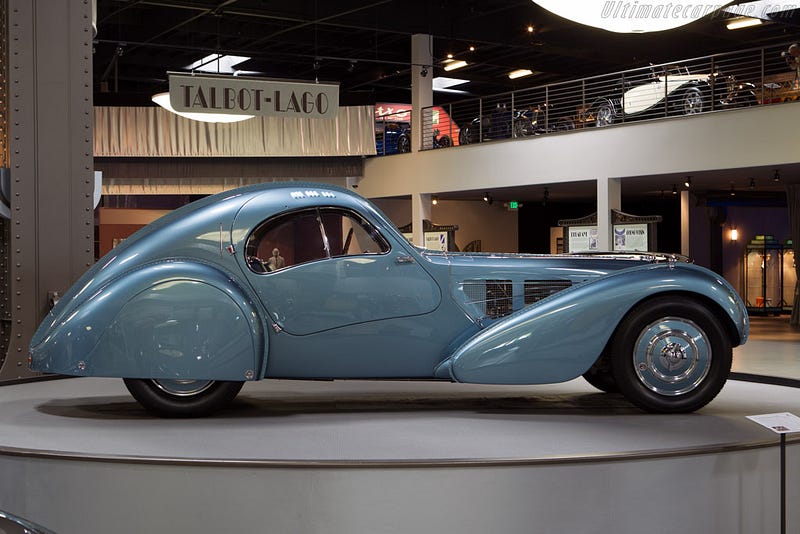
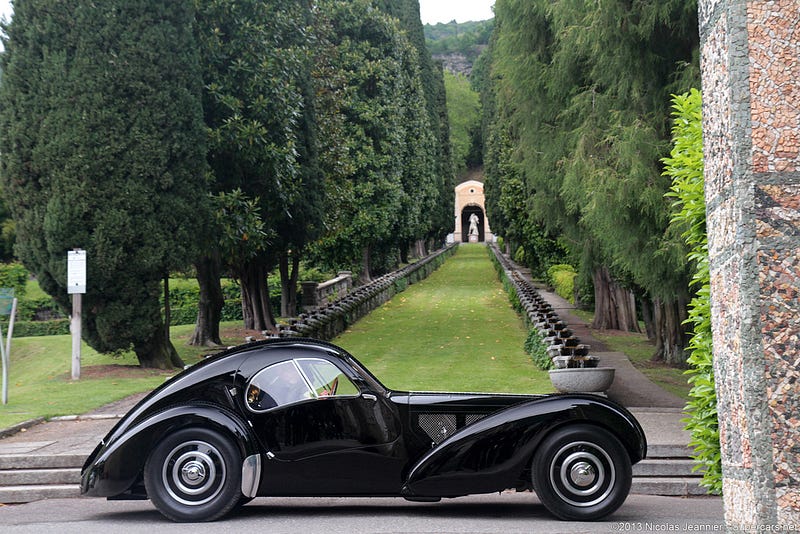
As part of the redesigned Saratoga Wine and Food Festival, both of the ultra-rare, $40-million-plus 1936 Bugatti Type 57SC Atlantics will be together on site at the Saratoga Performing Arts Center for the first time in more than 15 years.
The Atlantics will be part of the 2018 International Bugatti Tour taking place in Saratoga Springs, in which there will be more than 80 Bugattis ranging from classic to modern-day models. This is the first time the tour has taken place in the United States in nearly a decade, and the first time ever in New York State.
Considered the “Mona Lisa” of automobiles, the Type 57SC Atlantic is considered among the very best of pre-war Europe. Jean Bugatti, the son of Bugatti founder Ettore Bugatti, created the Aérolithe concept, making its debut in Paris in 1935. It was well before its time, made out of a light but flammable magnesium alloy called Elektron; therefore the body panels were riveted externally.


Beneath the body was a new chassis (T57) and a new double-overhead-cam engine, making the Aérolithe the most advanced car of its time. After the Aérolithe show car, Bugatti only produced four supercharged Atlantic coupes using aluminium instead of magnesium while keeping the rivets. Powered by supercharged 3,257 cc inline-8 engines, these 170-plus horsepower cars could do north of 120 m.p.h.
Today, two cars remain. One belongs to the Mullin Automotive Museum in Oxford, Ca. and the other is owned by fashion mogul Ralph Lauren. The last time both vehicles were together was at the 2003 Pebble Beach Concours d’Elegance in California.
The Atlantics’ appearance was made possible through the American Bugatti Club, Alan Rosenblum, and the Saratoga Automobile Museum.


The Mullin Atlantic: It was delivered to Lord Victor Rothschild in England on Sept. 2, 1936. Three years later, in 1939, Mr Rothschild had the Bugatti factory install a Roots supercharger from a Type 55 engine, upgrading the model to a Type 57SC. Having blown up the engine, he nevertheless kept the car in storage in England until 1941, when he sold it to his countryman Mr T.P. Tunnard Moore. Mr Moore and Robert Arbuthnot, a sometime racer at Brooklands, were partners at High-Speed Motors of London. At some point, Mr. Moore sold the car to Arbuthnot, who in turn sold it to Rodney Clarke of Continental Cars, Ltd., in 1944. A year later, Mr. Clarke sold the Type 57SC to Mr Robert Oliver, a wealthy American doing duty in France as a member of the US Army Medical Corps. In August 1946, Mr. Oliver had 57374 shipped to the United States, where he received it in New York and proceeded to drive it home to Los Angeles. In 1953, Mr. Oliver shipped the car back to the Bugatti factory, where its engine was completely rebuilt and the correct Type 57SC supercharger and hydraulic brakes were installed. Following Mr. Oliver’s passing the Atlantic was sold in 1971 through public auction to Dr. Peter Williamson who paid an unprecedented $59,000. Following refurbishment, the car was shown at Pebble Beach in 2003 and won “Best in Show”. In 2010 the Williamson family sold the Atlantic to a buyer from whom the car is graciously on loan.


The Lauren Atlantic: It was ordered by English barrister Richard B. Pope, who was also an amateur tennis champion. Great Britain was Bugatti’s best export market, and Pope was the company’s most devoted British customer. The Atlantic was his tenth Bugatti, as he ordered a new model whenever they came out. The most distinctive feature of its almost sinister body is the exposed seams with button head rivets running down the spine and around the fenders. This construction technique came about because the magnesium alloy used in an earlier Bugatti models was problematic to weld. Although the Atlantic’s aluminum body presented no such obstacle, designer Jean Bugatti retained the riveted seams for aesthetic reasons. Revered Bugatti historian Hugh Conway found the Atlantic “extraordinary, bizarre and interesting, but not perhaps beautiful in any normal sense.” The car is, in its essence, a fluid natural form to which Jean Bugatti deftly added his own flamboyant touches. Ralph Lauren purchased the vehicle in 1988, in which it underwent a restoration from 1989 to 1991.
“Hosting the only two Atlantic cars in the world — which haven’t been together in 15 years — on our grounds at Saratoga Performing Arts Center is a once-in-a-lifetime opportunity for our community and for lovers of fine cars from around the globe to experience their beauty. These rare and exquisite automobiles represent a significant piece of history that will shine against the backdrop of our park’s opulent reflecting pool, set within the Roosevelt Campus of the Spa State Park,” said Elizabeth Sobol, president & CEO of Saratoga Performing Arts Center. “We are grateful to the American Bugatti Club, Alan Rosenblum and the Saratoga Automobile Museum for making this exceptional viewing possible.”
“There are occasions in one’s life that can be considered a once-in-a-lifetime experience. Having these two Bugatti Atlantics together for the first time in 15 years is truly an incredible opportunity for not just Saratoga Springs but for all of New York State. My thanks to Alan Rosenblum and the American Bugatti Club for making this fantasy become reality,” said Carly Connors, executive director of the Saratoga Automobile Museum.
“Securing the second Atlantic is huge for us. We’ve revamped the festival on so many levels, and having this addition completes the experience in the best way. We are looking forward to being the first event to host these two iconic Bugattis together for the first time in 15 years. It’s safe to say that guests are in for a thrilling and magical weekend,” said Colin Cowie, founder and CEO of Colin Cowie Lifestyle.
Held in the beautiful Saratoga Spa State Park, the weekend is anchored by four events: an Adirondack Road Tour and Luncheon, Friday’s Fired Up! Grill Competition with Chef David Burke and Red Sox legend David Ortiz, Saturday’s Grand Tasting and — for the first time — brunch with Colin Cowie and Todd English. Presented in partnership with the Saratoga Automobile Museum and Colin Cowie Lifestyle, proceeds from the festival benefit education programming at SPAC and the Museum.
For more information about the Saratoga Automobile Museum, visit saratogaautomuseum.org.

ASTON MARTIN RECREATES ICONIC JAMES BOND ‘GOLDFINGER’ DB5

CLASSIC TORQUE
FROM CLASSIC CHATTER


ASTON MARTIN RECREATES ICONIC JAMES BOND ‘GOLDFINGER’ DB5


  • Aston Martin and EON Productions to create 25 Goldfinger DB5 continuation cars

  • Cars to include working gadgets to be developed by Oscar®-winner Chris Corbould OBE, special effects supervisor on eight previous James Bond films, working with the SFX department on a total of fourteen 007 adventures

  • Built at Aston Martin Works, Newport Pagnell – the original home of the DB5

  • First customer deliveries scheduled for 2020
20 August 2018, Gaydon: The iconic Aston Martin DB5 is back, thanks to a unique collaboration between Aston Martin and EON Productions, the company that produces the James Bond films.
Following the successful DB4 G.T. continuation project, a series of 25 Goldfinger DB5 continuation editions*, will be created for customers by Aston Martin Works and EON Productions. The Goldfinger DB5 continuation will be based on James Bond’s legendary car from 1964 and built by Aston Martin Works at Newport Pagnell – the original home of the DB5. They will be authentic reproductions of the DB5 seen on screen, with some sympathetic modifications to ensure the highest levels of build quality and reliability.
This authenticity will extend to include functioning gadgets such as revolving number plates and more, which were made famous in Goldfinger. The gadgets will be co-developed with Oscar®-winner Chris Corbould, special effects supervisor from the James Bond films. Officially sanctioned by Aston Martin and EON Productions, all the Goldfinger edition cars will be produced to one specification - Silver Birch paint - just like the original.
The most instantly recognisable car of all-time, the DB5 made its first appearance in the third James Bond movie, Goldfinger, alongside Sean Connery as James Bond. Laden with gadgets and armaments installed by Q Branch, the secret agent’s Aston Martin became an instant hit with moviegoers.
Since its seminal appearance in Goldfinger the DB5 has featured in a further six James Bond movies: Thunderball (1965), again with Connery; GoldenEye (1995) and Tomorrow Never Dies (1997) with Pierce Brosnan and three appearances alongside Daniel Craig in Casino Royale (2006), Skyfall (2012) and Spectre (2015). James Bond and his DB5 have become two icons of popular culture and one of the most successful and enduring movie partnerships of all-time.
Such was its popularity, the DB5’s movie debut even spawned a Corgi die-cast model, an astonishing 2.5m of which were sold in its first year of production (1965). No wonder an entire generation of children grew-up aspiring to own an Aston Martin. Now, thanks to the remarkable Goldfinger DB5 continuation project, a fortunate 25 of them can now own a faithful and authentic tribute to that original car. A further three cars will be built – one each for EON and Aston Martin, plus another to be auctioned for charity.
Andy Palmer, President and Chief Executive Officer, Aston Martin, said: “The connection between Aston Martin and James Bond is something of which we are very proud and it is remarkable that the DB5 remains the definitive James Bond car after so many years. To own an Aston Martin has long been an aspiration for James Bond fans, but to own a Silver Birch DB5, complete with gadgets and built to the highest standards in the very same factory as the original James Bond cars? Well, that is surely the ultimate collectors’ fantasy. The skilled craftspeople at Aston Martin Works and the expert special effects team from the James Bond films are about to make this fantasy real for 25 very lucky customers.”
Paul Spires, Managing Director at Aston Martin Works, added of the Goldfinger DB5 continuation editions: “The connection between Aston Martin and James Bond originated more than half a century ago. Creating 25 Goldfinger DB5 continuations and working with EON Productions and special effects supervisor, Chris Corbould, is something truly unique and a real career highlight for everyone involved here at Aston Martin Works.”
Each Goldfinger DB5 continuation car will be priced at £2.75m plus taxes. First deliveries to customers will commence in 2020.
Goldfinger DB5 continuation cars

Thursday, 16 August 2018

CELEBRATING 60 YEARS OF THE PIVOTAL DB4

CLASSIC TORQUE
FROM CLASSIC CHATTER

CELEBRATING 60 YEARS OF THE PIVOTAL DB4

  • 60 years since Newport Pagnell produced the first DB4
  • DB4 anniversary display to appear at Concours of Elegance
  • Original DB4 GT and DB4 GT Zagato to form part of the display
16 August 2018, Gaydon: Aston Martin stunned the world when it first unveiled DB4 in 1958 and now, on its 60th anniversary, an exclusive display will take place at the Concours of Elegance, hosted at Hampton Court Palace, from the 31 August until 2 September 2018.
Assembled by the Aston Martin Owners Club, the line-up will include a DB4 prototype, an example of DB4 Series 1, 2, 3, 4 and 5 plus an original DB4 GT, DB4 GT Zagato and DB4 Bertone Jet. The newly launched DB4 GT Continuation will also form part of the display.
Joining this exquisite line-up will be the latest Aston Martin models to bear the famous David Brown badge including the DB11 Grand Tourer and the brand’s latest release, the DBS Superleggera. Although not a part of the DB bloodline, Aston Martin’s two-seater sports car Vantage and special edition Rapide AMR will also be at the Concours of Elegance, giving visitors a chance to see the famous marques most recent iterations.
Aston Martin president of the UK and South Africa, Phil Eaglesfield, said: “Beauty, performance and quality are still central to Aston Martin’s ethos as a brand, something that was initiated by David Brown and something which we still exemplify.

“We continue to produce cars with the famous DB initials and the DB11 Coupe, DB11 Volante and DBS Superleggera that exist on our current range carry the same characteristics as their predecessors. We create cars with a genuine passion that sit side by side with the iconic vehicles of our past.”
DB4 was the first in the Aston Martin trilogy that included DB5 and DB6, a series of three magnificent cars that secured the brand’s position in the hall of automotive fame. Handcrafted at Aston Martin’s, Newport Pagnell facility, DB4 was the brand’s first true Grand Tourer. It was an entirely new car with the platform chassis, disc brakes and 3.7-litre straight six-cylinder engine developed especially for the DB4, quite an achievement for a highly regarded but small British manufacturer.
The evolution of the DB4 was gradual but constant with each ‘Series’ categorising individual changes to design or engineering performance. In 1959, the DB4 GT was introduced following on from its DB4 GT prototype forefather, DP199, that was raced by Sir Stirling Moss at Silverstone winning its first ever outing at the BRDC race in 1959. With bodywork made of thinner aluminium, the wheelbase reduced by 13cm, the engine tuned and the rear seats removed on all but a few examples, the DB4 GT enjoyed a long and distinguished career on the racing circuit.
The DB4 GT Zagato is regarded by many as one of the most beautiful cars of all time. Each DB4 GT rolling chassis was sent over to the Zagato factory in Milan where it received a lightweight body designed by Ercole Spada, creating the distinctive design. Raced at Le Mans, the factory only ever planned to produce 25 with only 19 cars completed. Due to its relative scarcity, the DB4 Zagato is considered one of the most desirable Aston Martins ever built.
Tickets to see the DB4 anniversary display at Concours of Elegance can be purchased from https://concoursofelegance.co.uk/
.